Original – DOI: 10.33594/000000856
Accepted 06.03.2026 - Published online 16.03.2026
Cellular Physiology and Biochemistry (60): 116 - 126
Design and Evaluation of Passive Disinfection Air Filters Coated with Metal-Based Nanoparticles to Combat Hospital-Acquired Airborne Pathogens
bPolymer Research Unit, College of Science, Mustansiriyah University, Baghdad, Iraq,
cDepartment of Optics-Techniques, College of Health and Medical Technology, Al-Farabi University, Baghdad, Iraq,
dDepartment Of Radiology, College of Health and Medical Technology, University of Hilla, Babylon, Iraq,
eCollege of Health and Medical Techniques/ Babylon, AL-Furat Al-Awsat Technical University, Babylon, Iraq,
fBiotechnology Research Center, Al-Nahrain University, Baghdad, Iraq,
gDepartment of Medical Laboratory Techniques, College of Health and Medical Technology, Al-Farabi University, Baghdad, Iraq
hDepartment of Marine Biology, Faculty of Marine Sciences, King Abdulaziz University, Saudi Arabia.
Keywords
Abstract
Background/Aims: Nosocomial infections continue to be a serious problem in hospital settings, particularly in intensive care units (ICUs), where resistant germs can spread through the air. Air filters are often designed to capture particulate matter but not necessarily to kill live germs that remain on their surfaces. Materials: To address these issues, polypropylene filter media were imbued with silver (AgNPs), zinc oxide (ZnO), and copper oxide (CuO) nanoparticles to impart antibacterial activity. Chemical reduction was used to create AgNPs, while sol–gel and precipitation methods were used to prepare ZnO and CuO nanoparticles. Results: DLS and zeta potential measurements were utilized to calculate particle size distribution, polydispersity index, and surface charge. The filters were coated with nanoparticle suspensions by an alcohol-based dip-coating process, followed by heat treatment to solidify the deposited layers. Antibacterial activity was measured against Staphylococcus aureus (ATCC 25923) and Pseudomonas aeruginosa (ATCC 27853) using agar diffusion and direct-contact assays, and reusability was assessed over three cycles. Different variations were observed among the tested materials. Silver nanoparticles demonstrated the largest inhibition zones (18.2 mm for S. aureus and 16.7 mm for P. aeruginosa), followed by copper oxide nanoparticles, which showed moderate inhibition. Under identical conditions, zinc oxide exhibited the lowest inhibition. Over three reuse cycles, AgNP-coated filters retained the majority of the antibacterial activity with minimal decreases in inhibitory zone diameters. ZnO and CuO coatings, on the other hand, showed significantly higher decreases after many cleanings. Treatment of filters with nanoparticles significantly increased antibacterial efficacy compared to untreated controls (p < 0.05). Conclusion: In general, the addition of metal nanoparticles to polypropylene filter media appears to improve efficacy in lowering viable airborne bacterial loads. Silver-based coatings exhibited the highest resistance and effective antibacterial response among the studied materials, indicating their potential applicability in ventilation systems for the control of airborne infection within the limitations of the present three-cycle experimental framework.
Introduction
Airborne transmission has increasingly been recognized as an important route for the spread of hospital-acquired infections (HAIs), especially in enclosed clinical environments such as operating rooms and intensive care units (ICUs), where maintaining high indoor air quality is critical for patient safety (1, 2). Although ventilation and filtration systems are commonly used, standard filters generally only act as passive barriers and do not typically inactivate microorganisms in the airstream (3). Therefore, live bacteria that are trapped on the filter surface will pose a potential cross-contamination risk during the handling or maintenance of the filter. Infection caused by Staphylococcus aureus (including methicillin-resistant Staphylococcus aureus) and Pseudomonas aeruginosa are two gram-positive and gram-negative bacteria respectively that are clinically relevant and are often seen in healthcare facilities. Bacteria of these types are virulent and have the ability to survive in healthcare facilities, including surviving on frequently touched surfaces and both on surfaces and in the air, creating multiple opportunities for an outbreak to occur again. Because of this, there is an increased demand for filtration systems that not only trap these bacteria but also kill them actively. Due to their distinct physical and chemical characteristics and their increased surface area to volume ratio, metallic nanoparticles have attracted much attention as potential antimicrobial materials because of their improved interactions with bacteria. Silver nanoparticles (AgNPs) are amongst the most frequently studied and exhibit very good activity against even resistant bacteria. Additionally, ZnO and CuO nanoparticles show antibacterial activity and could be viable and potentially inexpensive alternatives to AgNPs; however, their effectiveness may vary based upon the characteristics of the particles used and the conditions under which they are applied. By adding nanoparticles to filter media that is typically used in home air filters, it may be possible to create active antimicrobial surfaces that could reduce the presence of microorganisms through contact with a filter (4; 5; 6; 7; 8). Therefore, the purpose of this study was to coat low efficiency part of the media: polypropylene HEPA-like sheets with AgNPs, ZnO, and CuO nanoparticles. This study will evaluate the physicochemical properties of these coatings as well as their ability to inhibit the growth of S. aureus and P. aeruginosa; the surface morphology of the coated fleece filters; and their stability when reused three times.
Materials and Methods
Bacterial Strains and Culture Conditions The bacterial strains employed in this study included Staphylococcus aureus (ATCC 25923) and Pseudomonas aeruginosa (ATCC 27853). Cultivation was carried out on nutrient agar (HiMedia, India) with incubation at 37°C for 24 hours. To maintain active cultures, isolates were preserved on Mueller–Hinton agar (MHA; Oxoid, UK) and sub-cultured at regular intervals. For antibacterial assays, the inocula were standardized to a 0.5 McFarland turbidity, corresponding to approximately 1.5 × 10⁸ CFU/mL, using a spectrophotometer (Jenway 6305, UK).
Synthesis of Metal-Based Nanoparticles Synthesis of silver nanoparticles (AgNPs) AgNPs were synthesized by chemical reduction without stabilizing agents. In this method, 1 mM AgNO₃ (Sigma-Aldrich, Germany) was mixed with deionized water with continuous stirring. This was followed by the slow addition of a freshly prepared 2 mM sodium borohydride (NaBH; Merck, Germany) solution with vigorous stirring on ice. The change of colour of the solution from colourless to pale yellow implied the formation of the nanoparticles. ZnO NPs were synthesized by sol–gel method using zinc acetate dihydrate (Zn (CH₃COO) ₂·2H₂O) with sodium hydroxide, whereas CuO NPs preparation was carried out by precipitation method using copper (II) sulfate pentahydrate (CuSO₄·5H₂O) and NaOH (9; 10). Immediately after fabrication, the particles were treated with polypropylene (PP) filter media to prevent agglomeration and ensure homogeneous dispersion. They were washed three times with deionized water to remove any remaining impurities. Next, they were washed with ethanol to remove loosely bound particles while preserving the physically adsorbed nanoparticles. Finally, the particles were dried at 60°C and stored in desiccators for later use.
Preparation of Nano-Coated Air Filters HEPA-like filter sheets made of polypropylene (Pore size by 0.3 μm, commercially available) were cut into a 5 cm diameter discs. The samples were added to a nanoparticle solution (0.5 mg/mL diluted with 70% ethanol) and sonicated for 15 min using a digital ultrasonic bath (Model DK-600, China) in order to achieve a homogenous dispersion of the NPs. They were subsequently dip-coated for 60 s and dried in air in a laminar flow cabinet under sterile conditions (ESCO, Singapore) and thermally cured at 60 °C for 2 h in a laboratory oven. Ethanol-only treated filters were used as controls.
Nanoparticle Characterization Characterization of the synthesized nanoparticles was performed using dynamic light scattering (DLS) on a Malvern Zetasizer Nano ZS (Malvern Instruments, UK) to determine hydrodynamic diameter and polydispersity index (PDI). Surface charge and colloidal stability were assessed through zeta potential analysis. Morphological features were examined by scanning electron microscopy (SEM; TESCAN VEGA3, Czech Republic) following sputter-coating with a thin gold layer using a Quorum SC7620 mini coater (UK).
Antibacterial Activity Assessment The antibacterial activity was determined by using the agar well diffusion assay (11). Standardized bacterial inocula were spread onto Mueller–Hinton agar plates by using sterile cotton swabs. Wells of 6 mm in diameter were filled with 100 μL of nanoparticle suspension. After a 24 hours incubation at 37 °C, inhibitory zones were measured in millimeters. Furthermore, nanoparticle-coated filter discs were placed directly on inoculated agar surfaces to investigate contact-mediated inhibition. To ensure repeatability and statistical accuracy, every examination was carried out three times.
Surface Morphology of Coated Filters Scanning electron microscopy (SEM) was used to assess whether the coating process modified the structural integrity of the polypropylene fiber matrix. The fibrous structure and large porous morphology remained unchanged after coating. Therefore, SEM was not used to deduce the morphology, dispersion, or surface distribution of the nanoparticles.
Filter Reusability and Stability Testing The use of filters that were coated with nanoparticles was evaluated for reuse after each of three experimental cycles. Filters were inoculated with bacteria and cleaned with a 70% ethanol spray after removal; then dried at room temperature and reinserted back into the experiment using the same conditions as previously. The zone of inhibition was measured at the end of each cycle to provide an indication of how well the coating worked and how long it had provided an antibacterial effect.
Statistical Analysis All experimental results were presented as means values with standard deviation (SD). One-way analysis of variance (ANOVA) was used in GraphPad Prism version 9.0, followed by Tukey’s post hoc test to discover pairwise differences throughout treatments. A p-value lower than 0.05 indicates statistical significance. To assure data dependability, each experiment was carried out three times.
Results
This part of the study presents the important findings from the experimental investigation. The findings are organized into four main sections: nanoparticle characterization, antibacterial action against major hospital-associated infections, surface properties of the coated filters, and reusability. The conclusion is supported by numerical statistics, which are added to the tables and figures to help clarify the findings.
Characterization of Synthesized Nanoparticles Metal-based nanoparticles were produced and evaluated for average particle size, zeta potential, and polydispersity index (PDI). Silver nanoparticles (AgNPs) had the smallest size, average 21.3 nm, and the highest surface stability with a zeta potential of –32.5 mV. In contrast, zinc oxide (ZnO) and copper oxide (CuO) nanoparticles were larger, measuring 45.8 nm and 38.6 nm, respectively. The results show that all nanoparticles that were evaluated had PDI values below 0.35; therefore, they had a uniformly dispersed particle distribution in the final product and would be appropriate for use in any coating application. The following is a summary of the analytical test data for the characterization of each material used (Fig. 1): · Silver (AgNPs): 21.3 nm, zeta potential = –32.5 mV · Zinc Oxide (ZnO): 45.8 nm, zeta potential = –27.1 mV · Copper Oxide (CuO): 38.6 nm, zeta potential = –25.4 mV
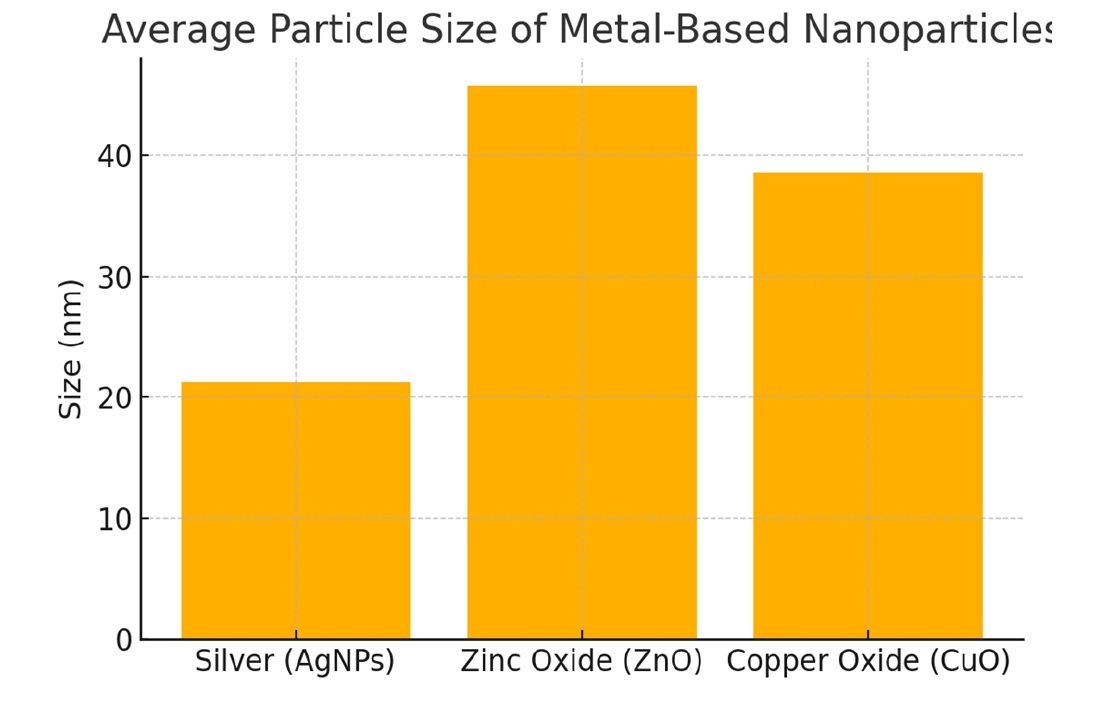
Fig. 1: Figure. 1 shows the differences in average particle size and surface characteristics between the three types. As expected, according to the synthesis procedures, AgNPs were the smallest, followed by CuO and ZnO nanoparticles.
Table 1: provides a detailed summary of the physicochemical properties of the nanoparticles, including size, zeta potential, and PDI.
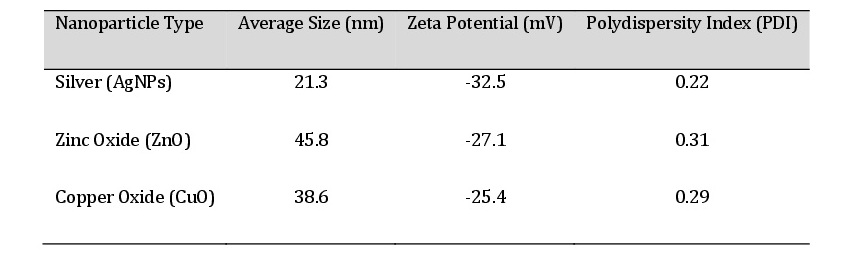
Table 1: Characterization of parameters associated with metal-based nanoparticles used in this investigation can be seen in the table below showing means for average particle size, surface charge (Zeta potential) and polydispersity index (PDI) of three different types of metal particles (Silver, Zinc Oxide and Copper Oxide) respectively from this research project
Antibacterial Activity of Metal-Based Nanoparticles The antibacterial activity of nanoparticles (AgNPs, ZnO, and CuO) against two dominant hospital-acquired pathogens Staphylococcus aureus and Pseudomonas aeruginosa, was measured using an agar well diffusion method. The dimension of the inhibition zones is an indicator of how much bacterial growth has been inhibited. Generally, the AgNPs produced the most significant inhibition zones: 18.2 mm against S. aureus and 16.7 mm against P. aeruginosa, demonstrating strong antibacterial potential (Fig. 2). These findings related to their large surface area to volume ratio, ease of penetration of the cell wall, and the production of oxidative stress, which damages critical cellular components required for survival. The CuO nanoparticles revealed moderate antibacterial activity, with inhibition zones of 14.3 mm against S. aureus and 13.5 mm against P. aeruginosa. Even if CuO did not produce inhibition zones as large as AgNPs, they reveal sufficient antibacterial activity. This activity can be explained by their ability to produce reactive oxygen species that are responsible for disrupting and damaging the integrity of bacterial cellular structures. The ZnO nanoparticles formed the least amount of antibacterial activity. The lower antibacterial activity of ZnO nanoparticles may be related to changes in characteristics (particle size, solubility, and surface charge) that alter both their bioavailability and the nature of their interaction with different types of bacteria (Table 2). The nanoparticles were evaluated under controlled laboratory conditions by applying them onto filter membranes as coatings. The silver-coated filters had the strongest antibacterial response compared to the other coatings, especially with regard to the bacterium Staphylococcus aureus and Pseudomonas aeruginosa. Filter membranes coated with copper oxide produced moderate inhibition of these bacteria; whereas, filter membranes coated with zinc oxide had little or no effective inhibition of either S. aureus or P. aeruginosa. There was also no antibacterial effect produced by filter membranes not treated with any nanoparticles.
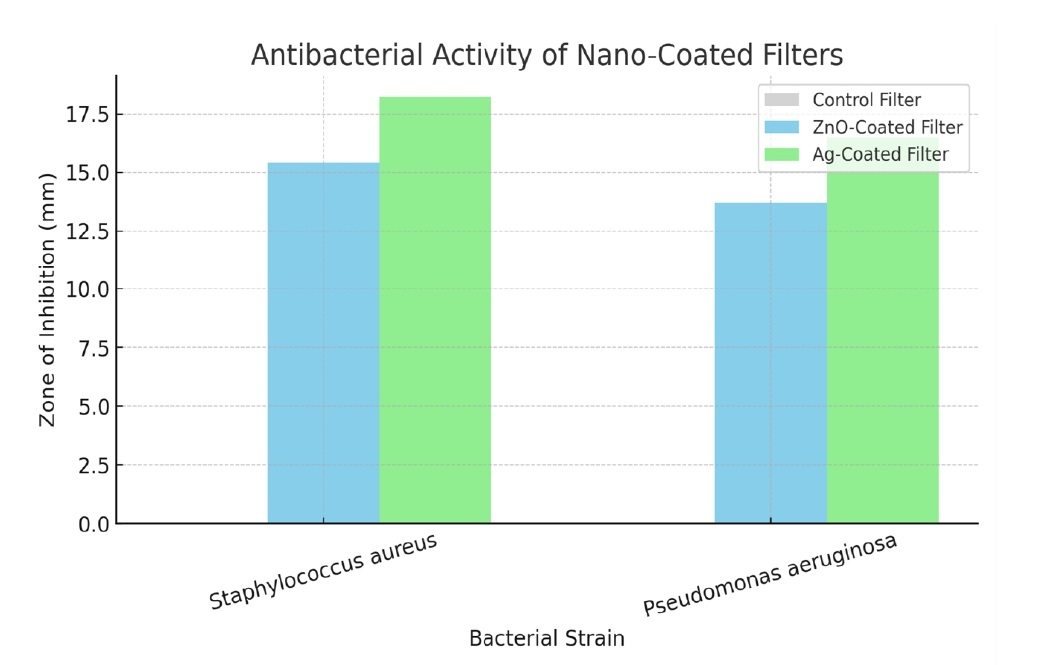
Fig. 2: Comparative antibacterial activity of nano-coated air filters against Staphylococcus aureus and Pseudomonas aeruginosa. The Ag-coated filter exhibited superior inhibition zones compared to ZnO-coated and control filters.
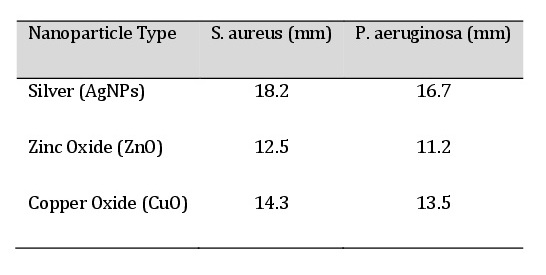
Table 2: Zone of inhibition (mm) for metal-based nanoparticles against selected bacterial strains
Surface Morphology of Nano-Coated Filters Scanning electron microscopy (SEM) was conducted to evaluate whether the coating process affected the structural integrity of the fiber filter matrix. The macroporous structure of the filters remained intact after treatment, with no visible damage or deterioration of the fibers compared to untreated filters. Under the imaging conditions utilized, individual nanoparticles were not directly visualized on the fiber surfaces. SEM analysis was limited to assessing preservation of the filter microstructure rather than determining nanoparticle morphology, dispersion, or surface distribution. Thus, the effectiveness of nanoparticle deposition was instead inferred from the results of antibacterial activity, which presented clear differences between uncoated and coated filters.
Filter Reusability and Antibacterial Stability To test if the coated filters could retain their antibacterial activity after repeated use and cleaning, three test cycles were performed for the AgNP-, ZnO-, and CuO-coated materials. For each cycle, the antimicrobial activity of the filter was evaluated. Following exposure to Staphylococcus aureus and Pseudomonas aeruginosa, filters were cleaned with 70% ethanol, air-dried and re-immersed in the following challenge. The inhibition zone diameters were recorded at each step to observe the variations in antibacterial activity. The silver nanoparticle-deposited filters retained high performance at all three cycles. Silver coated filters demonstrated minimal reduction in antibacterial activity. The inhibition zones were measured to be 17.8, 16.5mm against Staphylococcus aureus and 16.2, 15.1mm against Pseudomonas aeruginosa. There was only a modest decrease in the inhibition zone sizes indicating that the silver coating had not been compromised after washing the filters. The ZnO filter exhibited poor results, losing its efficacy against S. aureus and P. aeruginosa, respectively – 13.4 & 11.2, and 12.1 & 9.8, after three aggressiveness treatments (Fig. 3). It is more than likely that the coating on the ZnO filter was removed during cleaning. The CuO filter experiences satisfactory effectiveness for the first use but quickly loses effectiveness with continued treatment - an average drop between 15 and 20 percent SY# for S. aureus and P. aeruginosa. This loss of effectiveness may be attributed to either loss of material or reduced physical surface area for particle adhesion. Overall, the silver coated filter provided superior stability and remained effective throughout the three reuse cycles. Both the ZnO and CuO coatings exhibit antibacterial activity but would most likely benefit from applying a coating process every cycle to improve their stability across repeated reuse cycles (Table 3).
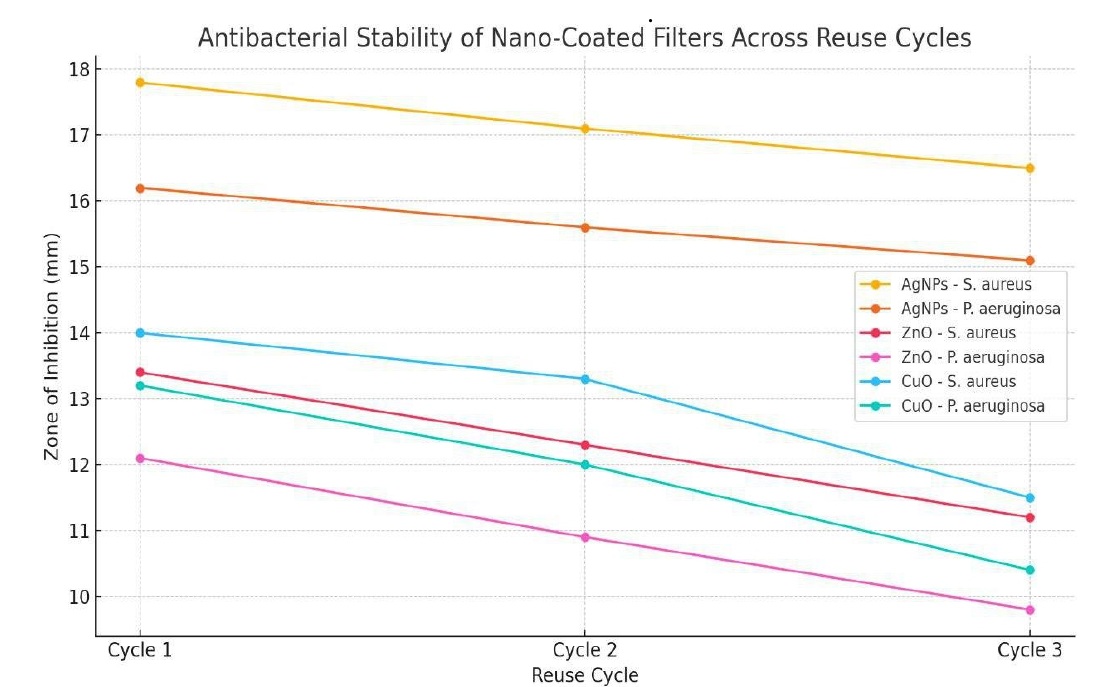
Fig. 3: Antibacterial stability of nano-coated filters across three reuse cycles against Staphylococcus aureus and Pseudomonas aeruginosa.
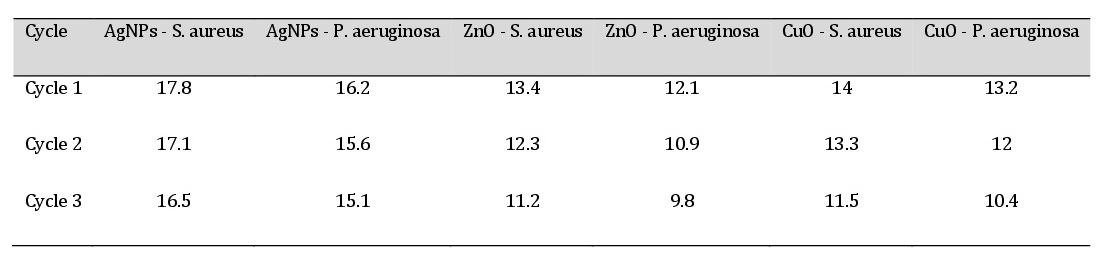
Table 3: Antibacterial activity (zone of inhibition in mm) of nano-coated filters over three reuse cycles. AgNP-coated filters showed minimal change in inhibitory zones, indicating strong stability, but ZnO- and CuO-coated filters showed increasing declines in antibacterial efficacy, underlining silver-based coatings’ superior reusability
Statistical Analysis and Significance Statistical treatment was performed to analyze whether antibacterial activities were significantly different after repeated use between different nano-coated filters. One-way ANOVA along with Tukey’s post hoc test was used to assess the differences of inhibition zone measurements from three independent replicates for the two types of filters and the two strains of bacteria. The level of significance was p <0.05. The results showed that the inhibition zone diameters of the AgNP-, ZnO-, and CuO-coated filters against both Staphylococcus aureus and Pseudomonas aeruginosa were significantly different (p < 0.05) (Fig. 4). The AgNPs-coated filters consistently resulted in the highest diameter of inhibition zone, demonstrating the highest antibacterial activity. A significant decrease in antibacterial performance was found in ZnO and CuO, but not in AgNP-coated filters (p < 0.05) when evaluating their ability on inactivation of bacteria during 3 usage cycles. The results indicate that the silver coatings were effective and lasted for three cycles. However, initially ZnO and CuO were efficient but showed a decrease in the effectiveness after repeated use. This implies that the surface needs to be further optimized in order for the coating to become more stable and more durable. Silver-coated filters showed significantly higher antibacterial activity compared to ZnO and CuO coatings (Table 4).
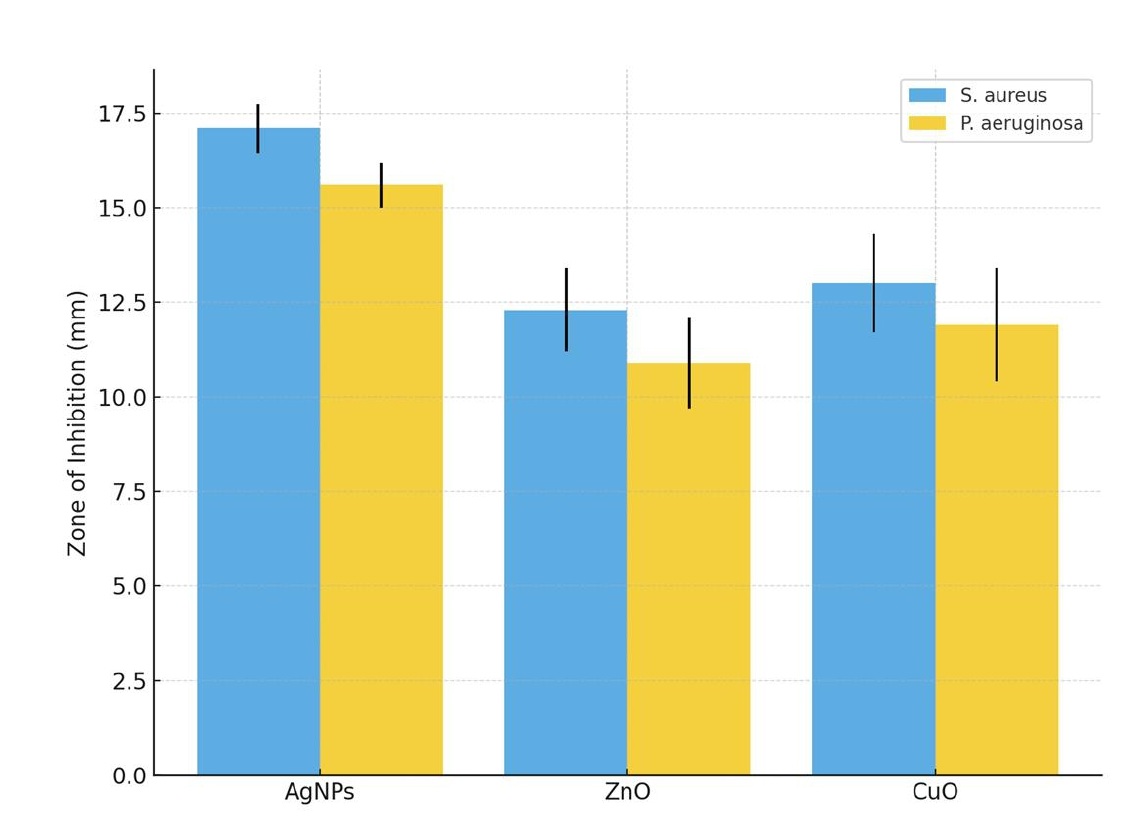
Fig. 4: Statistical comparison of antibacterial inhibition zones for nano-coated filters against Staphylococcus aureus and Pseudomonas aeruginosa
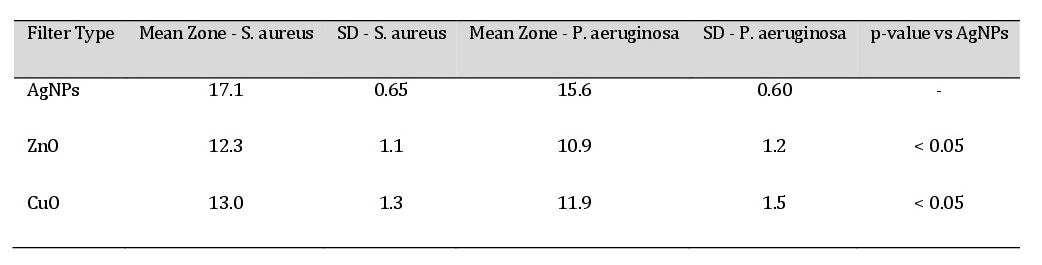
Table 4: Mean inhibition zone diameters (mm ± SD) for nano-coated filters against S. aureus and P. aeruginosa, and corresponding p-values compared to AgNPs
Discussion
For clinically significant airborne pathogens, nanoparticle-embedded metal-coated polypropylene filter media were observed to enhance antibacterial properties, as demonstrated in the present study. Among the tested samples, AgNPs exhibited pronounced antibacterial activity against Staphylococcus aureus (18.2 mm) and Pseudomonas aeruginosa (16.7 mm), indicating superior bioactivity compared to the other evaluated materials. It was further demonstrated that AgNP-deposited filters retained antibacterial activity after repeated usage, with only minor reductions in inhibitory zones. AgNPs boost antibacterial efficacy by producing silver ions (Ag⁺) that interact with bacterial cell membranes, proteins, and nucleic acids (12). Silver cations increase membrane permeability, inhibit respiratory enzymes, and prevent DNA replication. Furthermore, AgNPs can increase the generation of reactive oxygen species (ROS), causing oxidative stress and subsequent cellular damage. The observed inhibition zones are consistent with these proposed mechanisms. The antibacterial activity of CuO nanoparticles was moderate to low. The primary mechanism for antibacterial activity was attributed to ROS generation and copper ion depletion, which lead to the breakdown of membrane integrity and cellular metabolism (13). Nevertheless, their inhibition zones were smaller than those observed for AgNP-coated filters, which could indicate a lower efficiency of ion release and/or a weaker interaction with the bacterial cells under the conditions used for testing. ZnO nanoparticles were also found to possess lower levels of antibacterial properties. The production of Reactive oxygen species (ROS) is linked to ZnO's antimicrobial ability, and this depends on particle size, surface charge, and environmental conditions (14). The fact that the mean particle size was relatively larger and the surface was less stable in comparison to previous studies could explain why the antibacterial efficacy was reduced by the environment in which the tests were performed. The results of the re-use study indicate that the AgNP coatings were stable across three cycles of cleaning with ethanol. Inhibition zones against S. aureus and P. aeruginosa ranged between 15.1 mm and 16.5 mm, indicating strong adhesion of nanoparticles to the surface of polypropylene and antibacterial activity (15). In the absence of chemical binders or stabilizing agents, the adhesion of nanoparticles to polypropylene fibers is likely governed by physical interactions. These may include van der Waals forces, electrostatic interactions between nanoparticle surfaces and localized charge regions on the fibers, and mechanical interlocking within the micro-rough structure of the fibrous matrix. The dip-coating followed by heat treatment at 60 °C likely improves particle fixation by enhancing solvent evaporation and improving the contact between the particles and fibers. Similar physical adsorption mechanisms have been described for metal nanoparticles deposited onto polymer substrates (16). ZnO- and CuO-coated filters demonstrated decreasing efficiency of antimicrobials after several filtrations—the main cause appears to be that some of the nanoparticles were partially removed from the filter surface or less strongly attached than before (17). Reductions in effectiveness highlight the significance of nanoparticle adherence to the substrate in determining potential for maintaining consistent antimicrobial effects during repeated use. It is also necessary to compare the different types of nanoparticle formulations: For example, as long as the nanoparticle suspension can continue to move around in the agar, there is likely to be a larger inhibition zone; however, once the nanoparticles are immobilized on a filter fiber, the antibacterial effects are largely determined by the amount of contact made and by ions released locally from the filter surface. This is most likely responsible for the smaller inhibition zones seen on coating the filter, because the nanoparticle mobility when attached to the filter fibers is less than if in a suspension and, therefore, the nanoparticles have less opportunity to provide their inherent antimicrobial properties. Despite the promising antibacterial performance observed, the present evaluation was conducted under controlled laboratory conditions and limited to three experimental reuse cycles. Factors such as dynamic airflow, humidity fluctuations, mechanical shear stress, and prolonged operational exposure may influence nanoparticle adhesion and metal ion release kinetics, potentially affecting antimicrobial performance under practical conditions (18; 19). Therefore, further investigations under simulated or real ventilation conditions are required to assess performance beyond the three experimental reuse cycles examined in this study and to expand antimicrobial evaluation to include antifungal and antiviral activity. Within the experimental framework applied, nanoparticle modification enhanced the antibacterial functionality of polypropylene filter media. Among the tested materials, silver nanoparticles exhibited the highest antibacterial activity and the most stable performance across the three reuse cycles evaluated in this study(20; 21).
Conclusion
This study demonstrates that coating polypropylene air filters with metal-based nanoparticles improves their antibacterial activity against both Gram positive (Staphylococcus aureus) and Gram negative (Pseudomonas aeruginosa) bacteria. Silver nanoparticles (AgNPs) exhibited the greatest antibacterial activity among the materials tested and maintained stable performance over three reuse cycles. The increased performance of AgNP-coated filters may be attributed to the release of silver ions from the filter surface and may be associated with their smaller hydrodynamic size and higher colloidal stability which may contribute to contact-mediated antibacterial activity. ZnO and CuO coatings, however, showed only moderate initial activity and reduced efficacy after repeated reuse cycles. Nanoparticle modification of conventional passive filtration media enhanced antibacterial functionality. Within the experimental framework applied, silver-based nano-coatings demonstrated antibacterial performance; however, further investigation under real ventilation conditions is required before practical application can be established.
Acknowledgements
Thanks to the authors for their collaboration and support on this article.
Author contributions
M. M. K and H.N.A, :.Article Writing.T. A and H.M.A, :.Article Writing and Methodology.A. M. A and M.A.H :. Article Writing and Support. A. F. H and H. M.E:.Article Writing, Revisions, and Corresponding Author and Follow-up with all Authors.
Funding
There was no financial backing provided to the authors for this research. Disclosure of AI Assistance The use of artificial intelligence tools in my article was limited to searching for references close to my article and quickly finding information, without using artificial intelligence tools in the writing or discussing the results.
Ethical approval
This study does not include any human or animal models. All laboratory methods involving microbial cultures and nanoparticle applications complied with institutional biosafety and environmental protection guidelines. The Biosafety Committee of the Department of Biotechnology, College of Science, University of Baghdad has formally authorized these study protocols.
Disclosure Statement
The authors claim that they have no conflicting interests.
References
- Ahmed S, Ahmad M, Swami BL, Ikram S. A review on plants extract mediated synthesis of silver nanoparticles for antimicrobial applications: a green expertise. J Adv Res. 2016;7(1):17-28. https://doi.org/10.1016/j.jare.2015.02.007
- Azam A, Ahmed AS, Oves M, et al. antimicrobial activity of metal oxide nanoparticles against Gram-positive and Gram-negative bacteria: a comparative study. International Journal of Nanomedicine. 2012; 7:6003–6009. https://doi.org/10.2147/IJN.S35347
- Barros CH, Fulaz S, Stanisic D, Tasic L. Biogenic nanosilver against multidrug-resistant bacteria (MDRB). Antibiotics. 2018 Aug 2;7(3):69. https://doi.org/10.3390/antibiotics7030069
- Balouiri M, Sadiki M, Ibnsouda SK. Methods for in vitro evaluating antimicrobial activity: A review. Journal of pharmaceutical analysis. 2016 Apr 1;6(2):71-9.
- Beggs CB. The airborne transmission of infection in hospital buildings: fact or fiction? Indoor Built Environ. 2003;12(1-2):9-18.
- Chaloupka K, Malam Y, Seifalian AM. Nanosilver as a new generation of nanoproduct in biomedical applications. Trends in biotechnology. 2010 Nov 1;28(11):580-8.
- Chandraker SK, Lal M, Ghosh MK, Tiwari V, Ghorai TK, Shukla R. Green synthesis of copper nanoparticles using leaf extract of Ageratum houstonianum Mill. and study of their photocatalytic and antibacterial activities. Nano Express. 2020 May 12;1(1):010033.
- Franci G, Falanga A, Galdiero S, et al. silver nanoparticles as potential antibacterial agents. Molecules. 2015;20(5):8856–8874. doi:10.3390/molecules20058856. https://doi.org/10.3390/molecules20058856
- Hebbalalu D, Lalley J, Nadagouda MN, Varma RS. Greener techniques for the synthesis of silver nanoparticles using plant extracts, enzymes, bacteria, biodegradable polymers, and microwaves. ACS Sustain Chem Eng. 2013;1(7):703-712. https://pubs.acs.org/doi/10.1021/sc4000362
- Hochvaldová L, Večeřová R, Kolář M, Prucek R, Kvítek L, Lapčík L, Panáček A. Antibacterial nanomaterials: Upcoming hope to overcome antibiotic resistance crisis. Nanotechnology Reviews. 2022 Mar 7;11(1):1115-42. https://doi.org/10.1515/ntrev-2022-0059
- Iravani S. Green synthesis of metal nanoparticles using plants. Green Chem. 2011;13(10):2638-2650. https://doi.org/10.1039/C1GC15386B
- John AS, Gurumurthy K. Synthesis and Characterization of CuO Nanoparticles from Bioleached Copper through Modified and Optimized Double Precipitation Method. ACS omega. 2025 Mar 4;10(10):10193-8. https://doi.org/10.1021/acsomega.4c09064
- Joo S, Baldwin DF. Adhesion mechanisms of nanoparticle silver to substrate materials: identification. Nanotechnology. 2010 Feb 5;21(5):055204.
- Mahmoudi A, Tavakoly Sany SB, AhariSalmasi M, Bakhshi A, Bustan A, Heydari S, Rezayi M, Gheybi F. Application of nanotechnology in air purifiers as a viable approach to protect against Corona virus. IET nanobiotechnology. 2023 Jun;17(4):289-301.https://doi.org/10.1049/nbt2.12132
- Morones JR, Elechiguerra JL, Camacho A, Holt K, Kouri JB, Ramírez JT, Yacaman MJ. The bactericidal effect of silver nanoparticles. Nanotechnology. 2005 Aug 26;16(10):2346. https://doi.org/10.1088/0957-4484/16/10/059
- Narayanan KB, Sakthivel N. Biological synthesis of metal nanoparticles by microbes. Adv Colloid Interface Sci. 2010;156(1-2):1-13. https://doi.org/10.1016/j.cis.2010.02.001
- Park HJ, Kim JY, Kim J, Lee JH, Hahn JS, Gu MB, et al. Silver-ion-mediated reactive oxygen species generation affecting bactericidal activity. Water Res. 2009;43(4):1027-1032. https://doi.org/10.1016/j.watres.2008.12.002
- Padmavathy N, Vijayaraghavan R. Enhanced bioactivity of ZnO nanoparticles—an antimicrobial study. Science and Technology of Advanced Materials. 2008;9(3):035004. https://doi.org/10.1088/1468-6996/9/3/035004
- Panáček A, Kvitek L, Prucek R, Kolář M, Večeřová R, Pizúrová N, Sharma VK, Nevěčná TJ, Zbořil R. Silver colloid nanoparticles: synthesis, characterization, and their antibacterial activity. The Journal of Physical Chemistry B. 2006 Aug 24;110(33):16248-53.
- Pelgrift RY, Friedman AJ. Nanotechnology as a therapeutic tool to combat microbial resistance. Adv Drug Deliv Rev. 2013;65(13-14):1803-1815.https://doi.org/10.1016/j.addr.2013.07.011
- Rai M, Yadav A, Gade A. Silver nanoparticles as a new generation of antimicrobials. Biotechnology Advances. 2009;27(1):76-83. https://doi.org/10.1016/j.biotechadv.2008.09.002