Original Article – DOI: 10.33594/000000880
CPB (60): 417 - 426
Accepted: 14.07.2026 - Published: 11.08.2026
Exploring Native Ecuadorian Legumes as Sustainable Sources of Antioxidants and Essential Amino Acids
bFacultad de Ingeniería en Mecánica y Ciencias de la Producción, Escuela Superior Politécnica del Litoral, ESPOL, Campus Gustavo Galindo, Km 30.5 Vía Perimetral, Guayaquil, 090902, Ecuador,
cDepartamento de Química, Facultad de Ciencias Exactas y Naturales, Universidad Técnica Particular de Loja, París s/n y Praga, Loja 11-01-07, Ecuador,
dDepartment of Food Science and Biotechnology, Escuela Politécnica Nacional, Quito, Ecuador,
eDepartment of Nutrition and Quality, National Institute of Agricultural Research, Mejía, Ecuador,
fi-Food, IIA-FoodUPV, Universitat Politècnica de València, 46022 València, Spain
Keywords
Abstract
Background/Aims: Underutilized native legumes may contribute to the development of sustainable, nutrient-dense foods with potential relevance to malnutrition and diet-related non-communicable diseases. Methods: This study evaluated the nutritional and functional profile of five native Ecuadorian legumes (Cajanus cajan, Lablab purpureus, Phaseolus lunatus baby lima, Phaseolus lunatus big lima, and Vigna unguiculata) through proximate composition, dietary fiber, mineral content, antioxidant capacity, amino acid profiles, amino acid scores (AAS), and phytate molar ratios. Results: Lablab purpureus showed the highest amino acid score (166.30%), followed by P. lunatus baby lima (159.46%) and V. unguiculata (156.82%), and all species exceeded the FAO/WHO indispensable amino acid reference pattern for older children, adolescents, and adults. Cajanus cajan was characterized by high dietary fiber (31.44 g/100 g) and calcium contents (5750 mg/kg), whereas Lablab purpureus and Vigna unguiculata showed higher iron and magnesium contents, together with antioxidant responses associated with phenolic compounds. Although phytate molar ratios suggested potential constraints on non-heme iron bioavailability, the comparatively low phytate ratios indicated lower predicted interference with magnesium availability. Principal component analysis explained 77.6% of the total variance and revealed differentiated nutritional profiles among species. Conclusion: These findings support a cautious translational interpretation of underutilized Ecuadorian legumes as differentiated plant food matrices in which phenolic compounds, dietary fiber, amino acids, and minerals may contribute to redox balance, gut barrier physiology, protein adequacy, and micronutrient nutrition.
Introduction
Malnutrition in Ecuador remains a dual public health challenge in which chronic undernutrition coexists with overweight, obesity, and diet-related non-communicable diseases. This combined burden supports the need for food-based strategies that provide protein, dietary fiber, minerals, and bioactive compounds without increasing dependence on highly processed foods or environmentally costly protein sources [1, 2]. Legumes are particularly relevant in this context because they combine moderate-to-high protein density, complex carbohydrates, dietary fiber, minerals, and antioxidant phytochemicals within a single plant-based food matrix [3, 4]. Beyond their macronutrient contribution, legumes contain phenolic compounds, flavonoids, dietary fiber fractions, phytates, minerals, and amino acids that may interact with human physiology through multiple biochemical pathways. Phenolic compounds may contribute to cellular redox homeostasis through direct radical-scavenging activity and by modulating endogenous antioxidant and inflammatory responses, including pathways related to Nrf2/ARE and NF-κB signaling [5, 6]. Dietary fiber can influence gut microbiota metabolism and the production of short-chain fatty acids, metabolites associated with intestinal barrier function and immunometabolic regulation [7, 8]. In parallel, amino acid composition determines the capacity of a protein source to meet indispensable amino acid requirements, whereas minerals such as calcium, magnesium, and iron are physiologically essential but their nutritional utilization is strongly influenced by food-matrix interactions, particularly the chelating activity of phytate [9, 10]. Ecuador harbors a diversity of native and underutilized legumes that remain insufficiently characterized from a nutritional physiology perspective. Species such as Cajanus cajan —pigeon pea—, Lablab purpureus —hyacinth bean—, Vigna unguiculata —cowpea—, and Phaseolus lunatus —lima bean— are locally available species with differentiated compositional attributes. Existing literature supports the nutritional relevance of legumes; however, accession-specific datasets are required to determine whether these species contribute primarily as protein sources, fiber- and calcium-rich ingredients, antioxidant-associated matrices, or starch-dense foods [3, 4]. Therefore, the objective of this study was to evaluate the nutritional and functional profile of five native Ecuadorian legume accessions through proximate analysis, dietary fiber fractions, mineral composition, phytate content, antioxidant assays, amino acid profiling, and multivariate statistics. In response to the need for a stronger physiological interpretation, the revised manuscript further integrates amino acid score analysis according to FAO/WHO reference patterns, phytate molar ratios, and a mechanistic discussion linking the measured compositional traits with plausible pathways related to redox-inflammatory regulation, gut barrier physiology, metabolic regulation, protein adequacy, and mineral bioavailability [9, 11].
Materials and Methods
Samples
Five legume accessions were collected from different regions of Ecuador: Cajanus cajan (gandul; Manabí), Phaseolus lunatus baby lima (habichuela; Manabí), Phaseolus lunatus big lima (haba pallar; Manabí), Lablab purpureus (zarandaja; Loja), and Vigna unguiculata (firigüero; Loja). Samples were oven-dried at 50 °C for 24 h, ground, and sieved to 35-70 mesh. Flours were stored in airtight containers at room temperature until analysis.
Proximate Composition and dietary fiber
Moisture, total protein, ash, and crude fat contents were determined according to AOAC Official Methods 925.10, 920.87, 923.03, and 920.85, respectively [12].Total dietary fiber (TDF) and insoluble dietary fiber (IDF) were determined using the enzymatic–gravimetric method AOAC 991.43. Soluble dietary fiber (SDF) was calculated as the difference between TDF and IDF [12].
Mineral Content, Reducing Sugars, Total Starch and Vitamin E
The concentrations of iron (Fe), calcium (Ca), and magnesium (Mg) were determined according to official AOAC protocols. Fe was quantified via AOAC method 999.10, while Ca and Mg were determined simultaneously using an atomic absorption spectrometer (PG Instruments, model AA500) following AOAC method 985.35 [12]. Reducing sugars before and after acid hydrolysis were quantified using the 3,5-dinitrosalicylic acid (DNS) colorimetric method as described by Miller [13], with absorbance measured at 540 nm. Total starch content was determined enzymatically according to the protocol described by Holm et al. [14], which involves hydrolyzing starch to glucose and subsequent colorimetric quantification. Vitamin E content, expressed as α-tocopherol and α-tocotrienol, was determined by high-performance liquid chromatography (HPLC) according to the method described by Piironen et al. [15].
Phytate Content
Phytate (inositol hexaphosphate) content was determined using anion-exchange chromatography according to the method of Harland and Oberleas [16].
Determination of Total Phenolic Content and Antioxidant Capacity
Antioxidant compounds were extracted using acidified solvents (pH ≈ 2) following the procedures of Saura-Calixto [7] and Thaipong et al [17].. Total phenolic content (TPC) was determined using the Folin–Ciocalteu reagent, as described by Alhakmani et al [18].. The method was adapted for a 96-well microplate, and absorbance was measured at 725 nm. Results are expressed as mg of gallic acid equivalents (GAE) per gram of sample. Antioxidant capacity was evaluated through three complementary assays:
- DPPH: Radical scavenging activity was determined at 515 nm according to Brand-Williams et al. [19], with modifications by Thaipong et al. [17].
- ABTS: The radical cation decolorization assay was performed at 734 nm following Arnao et al. [20].
- FRAP: Ferric reducing antioxidant power was measured at 593 nm according to Benzie and Strain [21].
Amino Acid Profile
Amino acid profiles were determined by reverse-phase high-performance liquid chromatography (RP-HPLC) using a Waters Alliance 2695 system. Samples were subjected to acid hydrolysis, followed by pre-column derivatization with 6-aminoquinolyl-N-hydroxysuccinimidyl carbamate (AQC). Separation was performed on an XBridge BEH C18 column (5 µm, 4.6 × 150 mm) using an acetonitrile/water/sodium acetate buffer gradient at a flow rate of 1.0 mL/min. Detection was carried out by fluorescence (λ_ex = 249 nm; λ_em = 395 nm), and quantification was based on external standards.
Protein Quality and Limiting Amino Acids
Protein quality was estimated by calculating amino acid scores (AAS) according to the FAO/WHO reference pattern for older children, adolescents and adults [9, 22]. Amino acids reported as g/100 g dry sample were converted to mg amino acid per g protein as: mg amino acid/g protein = (g amino acid/100 g sample ÷ g protein/100 g sample) × 1000. Sulfur amino acids (SAA) were calculated as methionine + cysteine, and aromatic amino acids (AAA) as phenylalanine + tyrosine. AAS was calculated as: AAS = measured amino acid content (mg/g protein) ÷ FAO/WHO reference value (mg/g protein). The limiting amino acid was the indispensable amino acid with the lowest AAS. This compositional index was used to evaluate amino acid adequacy [9, 22].
Phytate:mineral molar ratios
Phytate:Fe, phytate:Ca and phytate:Mg molar ratios were calculated from the experimentally determined phytate and mineral contents after conversion to molar units using the corresponding molecular or atomic weights. These ratios were used as predictive indicators of mineral bioavailability, recognizing that they estimate potential chelation effects rather than measuring human absorption directly [10, 23].
Statistical and multivariate analysis
Analyses were performed in triplicate and results are expressed as mean ± standard deviation. Principal component analysis (PCA) was applied to integrate the nutritional, antioxidant, mineral and amino acid variables and to identify species-specific compositional niches [24]
Results
Proximate composition, mineral density, and ingredient differentiation
The proximate composition (Table 1) confirmed that the evaluated accessions are relevant plant protein sources, with protein concentrations from 18.67 to 21.59 g/100 g. L. purpureus, P. lunatus and V. unguiculata showed the highest protein concentrations, whereas C. cajan was characterized by the highest total dietary fiber content (31.44 g/100 g). Mineral profiles were highly differentiated. C. cajan showed a markedly high calcium concentration (5750 mg/kg), whereas L. purpureus and V. unguiculata contained higher iron and magnesium.
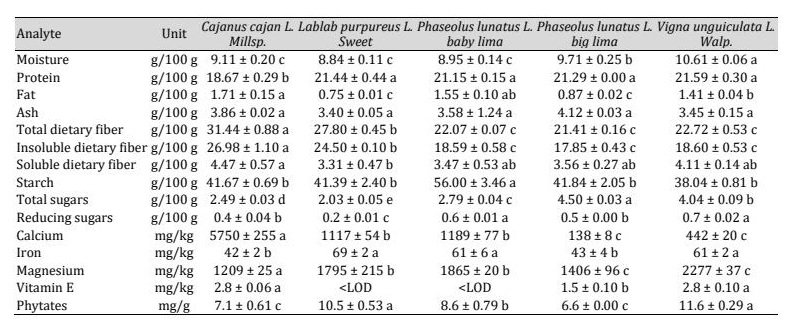
Table 1: Chemical Composition of Raw Ecuadorian Legumes. * Different letters show statistically significant differences, LOD, limit of detection. Analysis per gram of dry matter
Antioxidant capacity
The antioxidant assays showed clear species-dependent differences (Fig. 1). V. unguiculata and L. purpureus exhibited the highest responses across radical-scavenging and reducing-power assays, consistent with their total phenolic content [7, 17, 19–21].
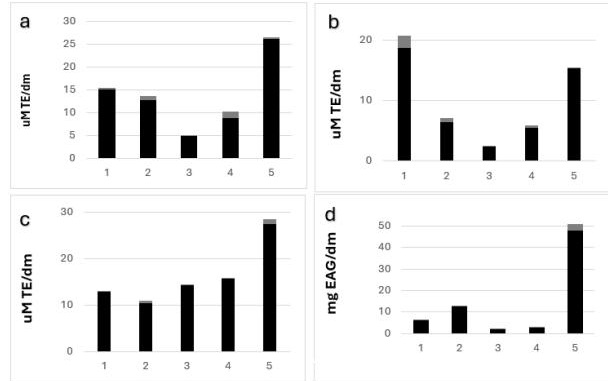
Fig. 1: Antioxidant capacity of raw legume flours (a) DPPH, (b) FRAP, (c) ABTS, (d) total polyphenol content. 1. Cajanus cajan L. Millsp – Gandul, 2. Lablab purpureus L. Sweet – Zarandaja, 3. Phaseolus lunatus L. baby lima – Habichuela, 4. Phaseolus lunatus L. big lima – Haba pallar, 5. Vigna unguiculata L. Walp – Firigüero. Analyses were performed on a dry matter basis.
Dietary fiber
Dietary fiber represented one of the most discriminating variables in the dataset. C. cajan showed the highest total and insoluble dietary fiber concentrations, while all accessions contained substantial fiber fractions.
Amino acid profile and amino acid score
The amino acid profile (Table 3) confirmed that the evaluated legumes contain nutritionally relevant concentrations of indispensable amino acids. L. purpureus and V. unguiculata were particularly rich in lysine. AAS analysis further characterized protein quality (Table 2). All legumes exceeded the FAO/WHO reference pattern for older children, adolescents, and adults, with the lowest AAS values ranging from 1.36 to 1.66. C. cajan presented leucine as the limiting amino acid, whereas valine was the limiting amino acid in L. purpureus, P. lunatus baby lima, P. lunatus big lima and V. unguiculata. Importantly, all limiting amino acid scores remained above 1.00.

Table 2: Limiting amino acids and lowest amino acid scores relative to the FAO/WHO reference pattern for older children, adolescents and adults. Values are mean ± standard deviation where replicate calculations were available. Different letters indicate significant differences
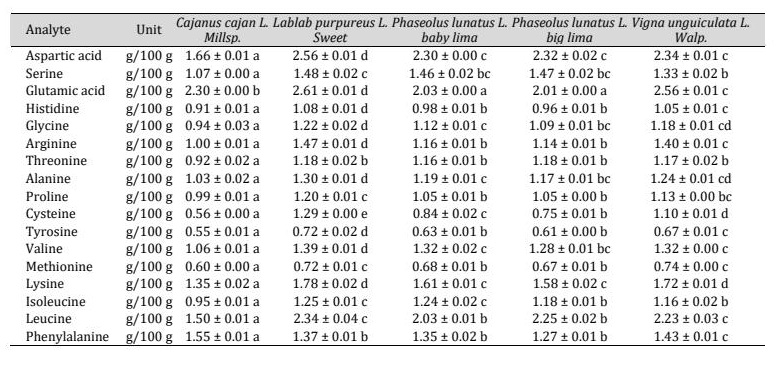
Table 3: Amino acid content of raw legumes. * Different letters indicate statistically significant differences between matrices., LOD, limit of detection. Analysis per gram of dry matter
Phytate:mineral molar ratios
Phytate:mineral molar ratios revealed marked differences among species (Table 4). All evaluated legumes showed phytate:Fe ratios above the critical threshold associated with reduced non-heme iron availability, with V. unguiculata presenting the highest value [10, 23, 28, 29]. In contrast, C. cajan showed the lowest phytate:Ca ratio because of its very high calcium concentration. P. lunatus big lima and V. unguiculata exhibited the highest phytate:Ca ratios. Phytate:Mg ratios were comparatively low and showed less variation among species.
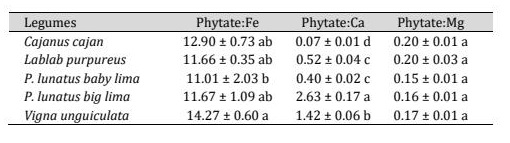
Table 4: Phytate:mineral molar ratios of raw legumes. * Values are mean ± standard deviation (n = 3) on a dry matter basis. Different letters within the same column indicate significant differences
Multivariate integration
Principal component analysis integrated compositional, antioxidant, mineral, phytate and amino acid variables, explaining 77.6% of the total variance in the first two components (Figure 2). PC1 separated protein- and amino acid-rich matrices from the fiber- and calcium-rich profile of Cajanus cajan, whereas PC2 differentiated antioxidant-associated variables from starch-dominant profiles.
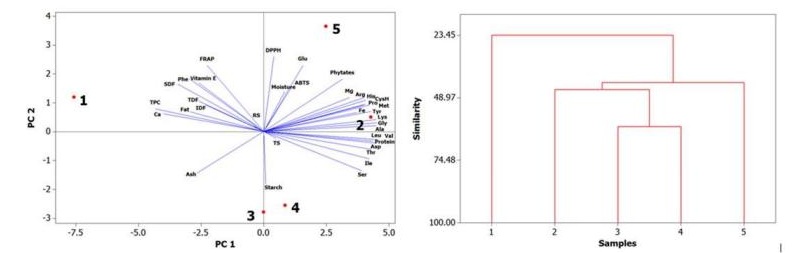
Fig. 2: Multivariate analysis of raw legume flours: (a). Principal Component Analysis (PCA), (b). Analysis multivariate segregation 1. Cajanus cajan L. Millsp – Gandul, 2. Lablab purpureus L. Sweet – Zarandaja, 3. Phaseolus lunatus L. baby lima – Habichuela, 4. Phaseolus lunatus L. big lima – Haba pallar, 5. Vigna unguiculata L. Walp – Firigüero.
Conceptual physiological model
A conceptual model summarizing the biological interpretation of the dataset is presented in Fig. 3.
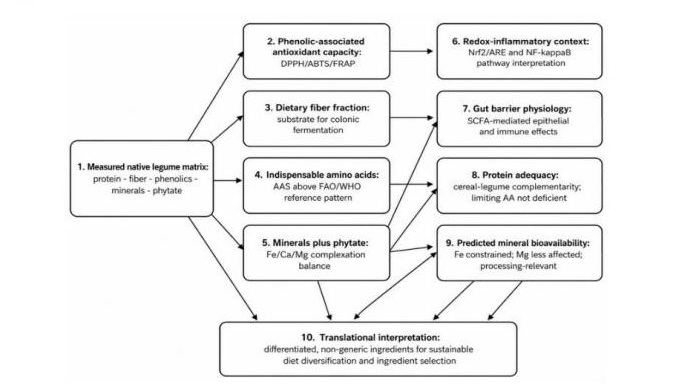
Fig. 3: Conceptual mechanistic model linking measured legume matrix components with physiologically relevant domains. The Fig. summarizes plausible biological interpretation of the compositional data.
Discussion
The evaluated Ecuadorian legumes exhibited distinct compositional characteristics, indicating that they should not be considered interchangeable food ingredients. While L. purpureus, P. lunatus, and V. unguiculata were characterized by higher protein concentrations, C. cajan was distinguished by its high dietary fiber and calcium contents. This separation suggests different nutritional applications, with some species being more suitable for protein enrichment and C. cajan representing a fiber- and calcium-dense ingredient. Although mineral concentrations differed considerably among species, mineral content alone does not predict nutritional usefulness because phytate can bind polyvalent cations and reduce mineral accessibility in plant-based diets [10, 23]. Consequently, phytate:mineral molar ratios provide a more physiologically meaningful interpretation than total mineral concentrations alone. The higher antioxidant activities observed in V. unguiculata and L. purpureus are consistent with their elevated phenolic contents. These in vitro assays should not be interpreted as evidence of biological efficacy but rather as indicators that these flours contain redox-active compounds capable of electron transfer, hydrogen atom donation and metal-chelating reactions under assay conditions [7, 17, 19–21]. Previous studies have associated dietary polyphenols with modulation of oxidative stress and inflammatory signaling, including Nrf2/ARE and NF-κB pathways [6, 25, 26]. Although the present study did not investigate these mechanisms experimentally, the observed antioxidant profile is consistent with this mechanistic framework. Dietary fiber emerged as another important distinguishing characteristic. The elevated fiber content of C. cajan may influence intestinal transit, microbial fermentation and the production of short-chain fatty acids, particularly butyrate, which have been associated with epithelial barrier function, immune regulation and inflammatory control [8]. In addition, phenolic compounds frequently remain associated with insoluble cell-wall structures and may become available after microbial fermentation, emphasizing that the fiber–phenolic matrix should be considered as an integrated food structure rather than isolated components [7]. The amino acid composition further supports the nutritional value of these legumes. The relatively high lysine concentrations observed in L. purpureus and V. unguiculata may complement cereal-based diets, in which lysine is frequently the limiting amino acid [9, 22, 27]. Moreover, all species exceeded the FAO/WHO indispensable amino acid reference pattern for older children, adolescents and adults. Although leucine or valine represented the limiting amino acid depending on the species, all amino acid scores remained above 1.00, indicating adequate indispensable amino acid density rather than nutritional deficiency. The phytate:mineral analysis refined interpretation of the mineral data. Elevated phytate:Fe ratios across all species suggest constrained non-heme iron bioavailability despite relatively high iron concentrations in some accessions [10, 23, 28, 29]. In contrast, the comparatively low phytate:Ca ratio observed for C. cajan indicates a more favorable predicted calcium profile. These findings also support the potential value of processing strategies such as soaking, germination and fermentation to reduce phytate content and improve mineral accessibility [10, 30, 31]. Principal component analysis further demonstrated that these legumes represent distinct nutritional matrices rather than a homogeneous group. Lablab purpureus and Vigna unguiculata were characterized by protein-rich, antioxidant-associated profiles with high lysine density and favorable amino acid scores. Although antioxidant assays such as DPPH, ABTS and FRAP cannot demonstrate direct cellular pathway modulation, their association with phenolic content is consistent with previously reported roles of dietary polyphenols in redox buffering and inflammatory regulation through Nrf2/ARE- and NF-κB-related pathways [25, 32, 33]. Conversely, C. cajan occupied a distinct fiber–calcium niche with a comparatively favorable phytate:calcium ratio, supporting its potential use in formulations targeting dietary fiber enrichment and mineral diversification. Dietary fiber has been associated with microbial fermentation, generation of short-chain fatty acids, epithelial energy metabolism, intestinal barrier integrity and immunometabolic signaling [8, 34, 35]. Furthermore, because all evaluated species exceeded the FAO/WHO indispensable amino acid reference pattern, they may contribute to protein adequacy in cereal-based or animal-protein-limited diets [9]. Nevertheless, interpretation of mineral quality should remain cautious because elevated phytate ratios predict reduced non-heme iron bioavailability. Therefore, compared with USDA FoodData Central data for commonly consumed legumes, these Ecuadorian accessions should be viewed not as a single superior nutritional profile but as complementary matrices for targeted ingredient selection, dietary diversification and sustainable plant-based nutrition [36]. Finally, the conceptual model presented in Fig. 3 integrates the experimentally measured components with plausible physiological domains, linking phenolic-associated antioxidant responses to redox-inflammatory signaling, dietary fiber to microbiota-derived metabolites and gut barrier physiology, indispensable amino acids to protein adequacy, and phytate–mineral interactions to predicted mineral bioavailability [11, 37].
Conclusion
Overall, these findings indicate that Ecuadorian legumes constitute differentiated plant matrices whose translational relevance is supported by complementary nutritional mechanisms: phenolic compounds associated with antioxidant responses and redox-inflammatory regulation; dietary fiber linked to microbial fermentation and gut barrier physiology; high compositional protein quality supported by indispensable amino acid adequacy and cereal-legume complementation; and phytate ratios predicting differential constraints on mineral bioavailability, particularly that of non-heme iron.
Acknowledgements
The authors sincerely thank the Research and Development Directorate and the Universidad Técnica de Ambato for their valuable support and resources that made this work possible.
Disclosure Statement
The authors declare no conflicts of interest.
References
- Fernández A, Martínez R, Carrasco I, Palma A: Impacto social y económico de la malnutrición: resultados del estudio realizado en Ecuador. Santiago de Chile, Comisión Económica para América Latina y el Caribe, 2017.
- United Nations Children's Fund: The state of the world's children 2014 in numbers: every child counts - revealing disparities, advancing children's rights. New York, UNICEF, 2014.
- Vaz Patto MC, Amarowicz R, Aryee ANA, Boye JI, Chung HJ, Martín-Cabrejas MA, Domoney C: Achievements and challenges in improving the nutritional quality of food legumes. Crit Rev Plant Sci 2015;34:105-143. https://doi.org 10.1080/07352689.2014.897907
- Yanni AE, Iakovidi S, Vasilikopoulou E, Karathanos VT: Legumes: a vehicle for transition to sustainability. Nutrients 2024;16:98.https://doi.org/10.3390/nu16010098
- Carbonaro M, Maselli P, Nucara A: Structural aspects of legume proteins and nutraceutical properties. Food Res Int 2015;76:19-30. https://doi.org/10.1016/j.foodres.2014.11.007
- Saha S, Buttari B, Panieri E, Profumo E, Saso L: An overview of Nrf2 signaling pathway and its role in inflammation. Molecules 2020;25:5474. https://doi.org/10.3390/molecules25225474
- Saura-Calixto F: Dietary fiber as a carrier of dietary antioxidants: an essential physiological function. J Agric Food Chem 2011;59:43-49. https://doi.org/10.1021/jf1036596
- Akhtar M, Chen Y, Ma Z, Zhang X, Shi D, Khan JA, Liu H: Gut microbiota-derived short chain fatty acids are potential mediators in gut inflammation. Anim Nutr 2022;8:350-360. https://doi.org/10.1016/j.aninu.2021.11.005
- Leser S: The 2013 FAO report on dietary protein quality evaluation in human nutrition: recommendations and implications. Nutr Bull 2013;38:421-428. https://doi.org/10.1111/nbu.12063
- Hurrell RF, Reddy MB, Juillerat MA, Cook JD: Degradation of phytic acid in cereal porridges improves iron absorption by human subjects. Am J Clin Nutr 2003;77:1213-1219. https://doi.org/10.1093/ajcn/77.5.1213
- Milacic M, Beavers D, Conley P, Gong C, Gillespie M, Griss J, Haw R, Jassal B, Matthews L, May B, Petryszak R, Ragueneau E, Rothfels K, Sevilla C, Shamovsky V, Stephan R, Tiwari K, Varusai T, Weiser J, Wright A, Wu G, Stein L, Hermjakob H, D'Eustachio P: The Reactome Pathway Knowledgebase 2024. Nucleic Acids Res 2024;52:D672-D678. https://doi.org/10.1093/nar/gkad1025
- Latimer GW Jr (ed): Official methods of analysis of AOAC International, ed 20. Rockville, AOAC International, 2016.
- Miller GL: Use of dinitrosalicylic acid reagent for determination of reducing sugar. Anal Chem 1959;31:426-428. https://doi.org/10.1021/ac60147a030
- Holm J, Björck I, Asp NG, Sjöberg LB, Lundquist I: Starch availability in vitro and in vivo after flaking, steam-cooking and popping of wheat. J Cereal Sci 1985;3:193-206. https://doi.org/10.1016/S0733-5210(85)80013-8
- Piironen V, Syväoja EL, Varo P, Salminen K, Koivistoinen P: Tocopherols and tocotrienols in Finnish foods: meat and meat products. J Agric Food Chem 1985;33:1215-1218. https://doi.org/10.1021/jf00066a050
- Harland BF, Oberleas D: Anion-exchange method for determination of phytate in foods: collaborative study. J Assoc Off Anal Chem 1986;69:667-670. https://doi.org/10.1093/jaoac/69.4.667
- Thaipong K, Boonprakob U, Crosby K, Cisneros-Zevallos L, Byrne DH: Comparison of ABTS, DPPH, FRAP, and ORAC assays for estimating antioxidant activity from guava fruit extracts. J Food Compos Anal 2006;19:669-675. https://doi.org/10.1016/j.jfca.2006.01.003
- Alhakmani F, Kumar S, Khan SA: Estimation of total phenolic content, in-vitro antioxidant and anti-inflammatory activity of flowers of Moringa oleifera. Asian Pac J Trop Biomed 2013;3:623-627. https://doi.org/10.1016/S2221-1691(13)60126-4
- Brand-Williams W, Cuvelier ME, Berset C: Use of a free radical method to evaluate antioxidant activity. Lebensm Wiss Technol 1995;28:25-30. https://doi.org/10.1016/S0023-6438(95)80008-5
- Arnao MB, Cano A, Acosta M: The hydrophilic and lipophilic contribution to total antioxidant activity. Food Chem 2001;73:239-244. https://doi.org/10.1016/S0308-8146(00)00324-1
- Benzie IFF, Strain JJ: Ferric reducing/antioxidant power assay: direct measure of total antioxidant activity of biological fluids and modified version for simultaneous measurement of total antioxidant power and ascorbic acid concentration. Methods Enzymol 1999;299:15-27. https://doi.org/10.1016/S0076-6879(99)99005-5
- World Health Organization: Protein and amino acid requirements in human nutrition: report of a joint WHO/FAO/UNU expert consultation. Geneva, World Health Organization, 2007. WHO Technical Report Series, no 935.
- World Health Organization, Food and Agriculture Organization of the United Nations: Human vitamin and mineral requirements: report of a joint FAO/WHO expert consultation, Bangkok, Thailand. Rome, Food and Agriculture Organization of the United Nations, 2002.
- Jolliffe IT, Cadima J: Principal component analysis: a review and recent developments. Philos Trans A Math Phys Eng Sci 2016;374:20150202. https://doi.org/10.1098/rsta.2015.0202
- Hussain T, Tan B, Yin Y, Blachier F, Tossou MCB, Rahu N: Oxidative stress and inflammation: what polyphenols can do for us? Oxid Med Cell Longev 2016;2016:7432797. https://doi.org/10.1155/2016/7432797
- Gao W, Guo L, Yang Y, Wang Y, Xia S, Gong H, Zhang BK, Yan M: Dissecting the crosstalk between Nrf2 and NF-κB response pathways in drug-induced toxicity. Front Cell Dev Biol 2022;9:809952. https://doi.org/10.3389/fcell.2021.809952
- Mariotti F, Gardner CD: Dietary protein and amino acids in vegetarian diets-a review. Nutrients 2019;11:2661. https://doi.org/10.3390/nu11112661
- Sandberg AS: Bioavailability of minerals in legumes. Br J Nutr 2002;88(suppl 3):S281-S285. https://doi.org/10.1079/BJN/2002718
- Castro-Alba V, Lazarte CE, Bergenståhl B, Granfeldt Y: Phytate, iron, zinc, and calcium content of common Bolivian foods and their estimated mineral bioavailability. Food Sci Nutr 2019;7:2854-2865. https://doi.org/10.1002/fsn3.1127
- Ghavidel RA, Prakash J: The impact of germination and dehulling on nutrients, antinutrients, in vitro iron and calcium bioavailability and in vitro starch and protein digestibility of some legume seeds. Lebensm Wiss Technol 2007;40:1292-1299. https://doi.org/10.1016/j.lwt.2006.08.002
- Khattab RY, Arntfield SD: Nutritional quality of legume seeds as affected by some physical treatments. 2. Antinutritional factors. Lebensm Wiss Technol 2009;42:1113-1118. https://doi.org/10.1016/j.lwt.2009.02.004
- Krajka-Kuźniak V, Baer-Dubowska W: Modulation of Nrf2 and NF-κB signaling pathways by naturally occurring compounds in relation to cancer prevention and therapy. Are combinations better than single compounds? Int J Mol Sci 2021;22:8223. https://doi.org/10.3390/ijms22158223
- Xu W, Lu H, Yuan Y, Deng Z, Zheng L, Li H: The antioxidant and anti-inflammatory effects of flavonoids from propolis via Nrf2 and NF-κB pathways. Foods 2022;11:2439. https://doi.org/10.3390/foods11162439
- Vinelli V, Biscotti P, Martini D, Del Bo' C, Marino M, Meroño T, Nikoloudaki O, Calabrese FM, Turroni S, Taverniti V, Unión Caballero A, Andrés-Lacueva C, Porrini M, Gobbetti M, De Angelis M, Brigidi P, Pinart M, Nimptsch K, Guglielmetti S, Riso P: Effects of dietary fibers on short-chain fatty acids and gut microbiota composition in healthy adults: a systematic review. Nutrients 2022;14:2559. https://doi.org/10.3390/nu14132559
- Ney LM, Wipplinger M, Grossmann M, Engert N, Wegner VD, Mosig AS: Short chain fatty acids: key regulators of the local and systemic immune response in inflammatory diseases and infections. Open Biol 2023;13:230014. https://doi.org/10.1098/rsob.230014
- U.S. Department of Agriculture, Agricultural Research Service: FoodData Central [Internet]. Beltsville, U.S. Department of Agriculture [cited 2026 Jun 29]. Available from: https://fdc.nal.usda.gov/
- Kanehisa M, Furumichi M, Sato Y, Kawashima M, Ishiguro-Watanabe M: KEGG for taxonomy-based analysis of pathways and genomes. Nucleic Acids Res 2023;51:D587-D592. https://doi.org/10.1093/nar/gkac963